PSYPOP: Free preview of a queer open letter to the giver Chappell Roan
PSYPOP is a series analyzing pop culture and media as a reflection of modern american society and the inadequacies of late stage capitalism.
This is the free preview version of my queer open letter to Chappell Roan. To read the entire 3,500 word piece, explore interactive hyperlinks, and access un-paywalled sources, subscribe to HAUNT.
2024 was the year everyone else discovered Chappell Roan. After a decade in music, Roan's "Midwest Princess" tour drew festival audiences that broke crowd records repeatedly. Her Best New Artist win at the 2025 Grammys is the crowning achievement of her biggest year yet.
A rise dubbed "meteoric" by countless journalists doesn't come without atmospheric friction—especially during a u.s. election year. In exchange for her growing fanbase, pundits and culture vultures demanded that the lesbian drag artist endorse a presidential candidate before November.
Hot-and-cold headlines created palpable frustration for Roan by the end of summer. After managing a tour Stevie Nicks called "outrageous" and "as bad as any schedule [Fleetwood Mac] ever did," she canceled her September appearances at All Things Go for her mental health, with support from the event's organizers.
She broke records again at Austin City Limits a week later as festival season and the "Midwest Princess" tour concluded. Still somehow glimmering, Chappell reported from stage at ACL's second weekend that she was close to losing her voice.
As a queer fan, this wasn't how I hoped Chappell Roan's mainstream explosion would go. On the other hand, I'm not surprised at establishment media's response to the most disruptive lesbian pop star to beat the odds in years.
For all of my research on Chappell Roan and an interactive reading experience, subscribe to access the full letter, a 15-minute read.
Chappell, politically queer fans want you to know:
Your shows celebrate aspects of queerness and members of our community that are increasingly important to protect in 2025. The Pink Pony Club feels like a place where a more liberated future for all queer and trans people, everywhere, can be dreamed, sung, and danced into existence.
"During the darkest days of the AIDS crisis, we buried our friends in the morning, we protested in the afternoon, and we danced all night. The dance kept us in the fight because it was the dance we were fighting for. It didn’t look like we were going to win then and we did. It doesn’t feel like we’re going to win now but we could. Keep fighting; keep dancing." — Dan Savage
What you've shared about your work and healthcare experiences resonates with many of the same marginalized people you design shows for. Our community, especially our BIPOC trans and queer siblings, are more likely than other populations to be disabled and underinsured.
In 2020, 32% of LBGTQIA+ and 56% of transgender people self-reported a disability to the Human Rights Campaign, even before Covid-19 had time to move through the population many times over. Covid-19 has since been found to damage T-cells and cause immune dysfunction, not unlike HIV.
"Even after vaccination, those with a history of COVID-19 showed weaker and less functional CD8+ T cell responses, a phenomenon likened to the immune damage seen in chronic viral infections like hepatitis C or HIV." — Dr. Anthony Leonardi, Substack, March 5, 2025
Disability awareness—even of my own disabilities, since my health forced me to leave an exploitative workplace and advocate for my needs—has completely changed how I approach community. There's no one-size-fits-all solution, and that's the beauty of it. There can be countless creative accommodations when we recognize one another's needs and collaborate to meet them.
"We have learned from both HIV/AIDS and COVID-19 that placing the burden of responsibility for a disease on communities that already lack resources is a bad public health policy. All communities, including privileged communities, need to be vigilant in preventing the spread of disease." — Emily Benedict, The Sick Times, Jan. 14, 2025
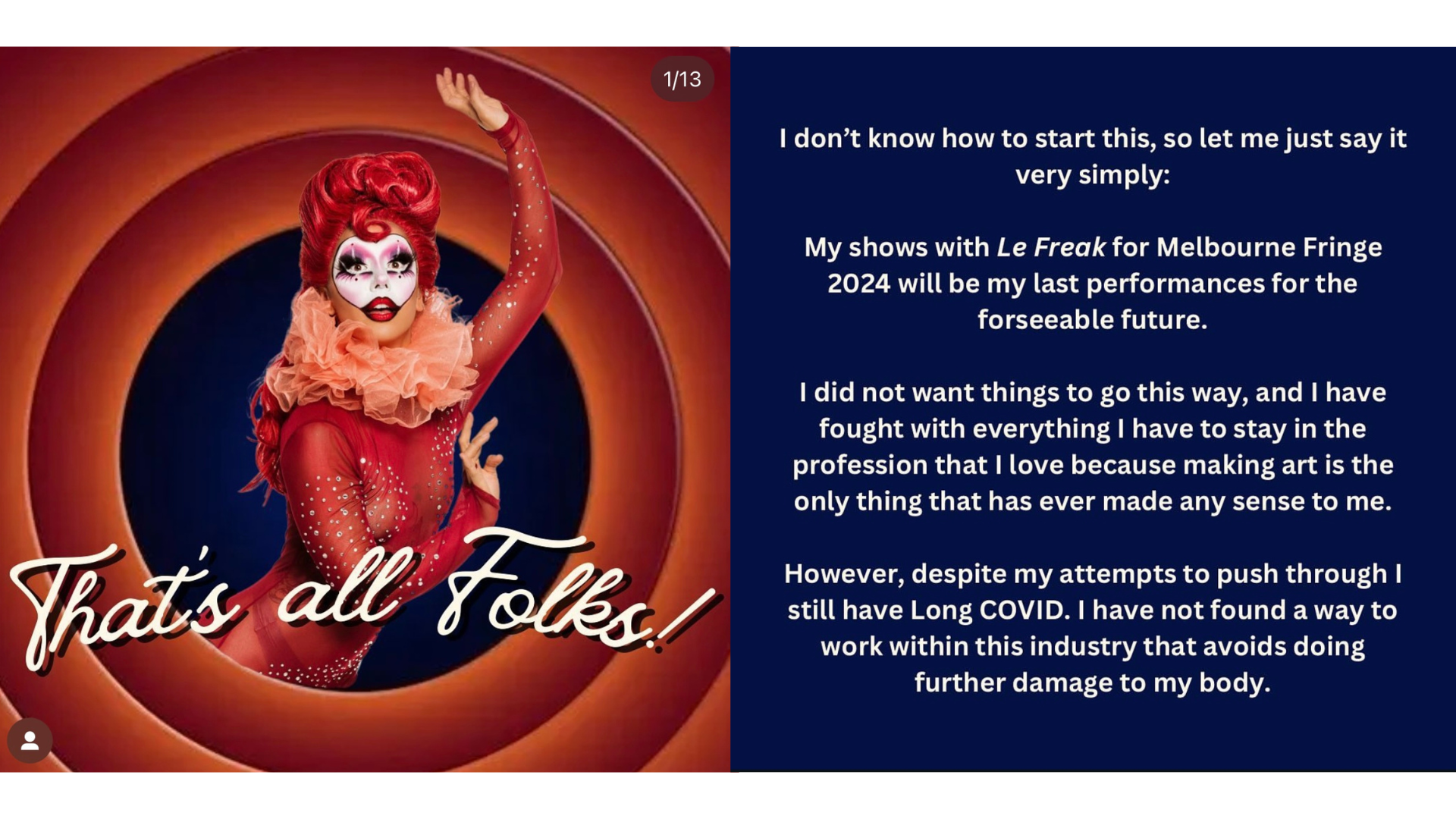
I'm often inspired by Themme Fatale, trans drag clown and self-proclaimed "Long Covid Bimbo Laureate" from Melbourne, Australia. They're open about their struggle with Long Covid and how it's completely changed their award-winning drag career. For their health, they stopped performing and founded Clean Air Naarm to share air purifiers with artists, making performance spaces "safer and more accessible place for both artists and audiences."
Information from disabled sex workers and queer artists like Themme Fatale helped me create a Covid-19 safety routine. A Brooklyn club show that can't be explained, only experienced? Hell yes. Rapid test, a black bandana-print KN95 mask (IYKYK), nasal spray, and anti-viral eyedrops. After the club? A second round of nose and eye preventatives, CPC mouthwash, and masking to minimize others' exposure until I can take an at-home PCR test a few days later.
“Performers rely on our bodies for our work, but performing in front of live audiences is inherently high-risk work for contagious airborne illnesses like COVID-19. With one in ten infections leading to long-term illness, reducing the risk of infection is vital to both the health of individual artists and the ongoing health of the arts more generally.” — Themme Fatale
Access to healthcare, work that isn't exploitative, and illness prevention shouldn't be privileges reserved for the few. These issues collide for a violent impact on many marginalized communities, especially disabled people. While we work to create the community safety net we'll need in 2025 and beyond, I'm happy to wear a mask when it keeps us all safer.
I imagine some of the Hollywood events you attend might have Covid-19 safety requirements that aren't shared with the general public. I wonder if Stevie Nicks has ever asked other musicians for Covid-19 test results before meeting in person, or if far-UV lights are used to disinfect green room and performance spaces.
"As a singer with asthma, I fucking hate the masks, but I wear them. People give you dirty looks. I dare anybody to give me a dirty look. I would just say, 'Hey, you know what? I’m Stevie Nicks. And if I get sick, my entire thing goes down. Forty families are out of work. So that’s why I have a mask on, asshole.'" — Stevie Nicks to Rolling Stone, Oct. 24, 2024
As a community with a generational legacy of neglected health, our safety and care are worth fighting for. If Covid-19 precautions haven't been a priority for you and your team, could they be? One masks-required show in cities where you're playing multiple nights would go far to accommodate our disabled community members.
Audiences deserve the chance to make the best choices for themselves and their health, just as much as nightlife and entertainment workers, whether performing or staffing venues, deserve safety at work. While politicians propose statewide mask bans, would you extend your allyship to those whose health requires them to mask and help destigmatize this accessible health tool?
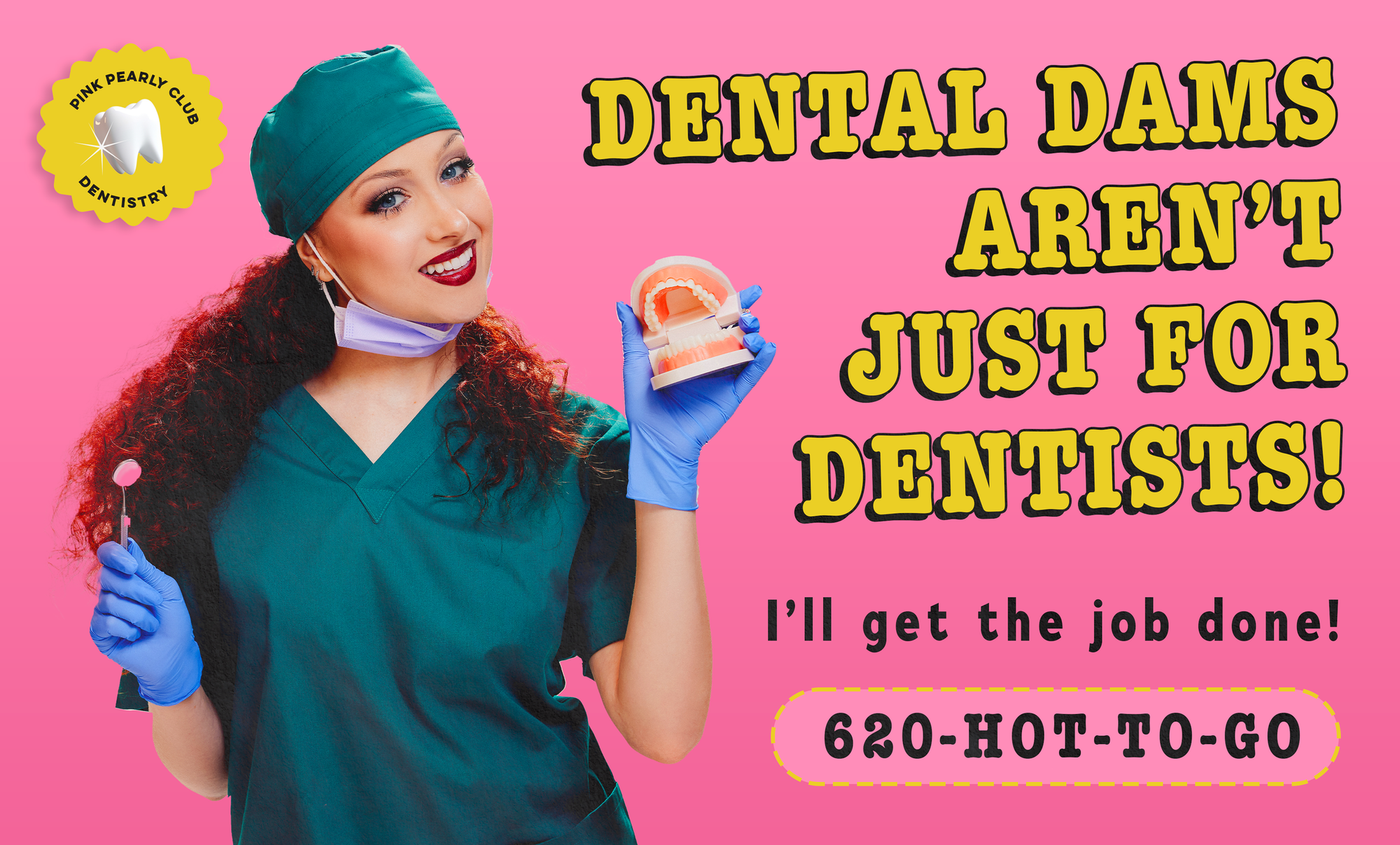
Like Stevie Nicks, masks aren't my favorite accessory. But they've become a symbol of something more important than the mild annoyance of wearing them. Along with dental dams, condoms, drug testing kits, naloxone, and keffiyehs, masks flag collective care and remind me I'm not alone in the struggle for liberation.
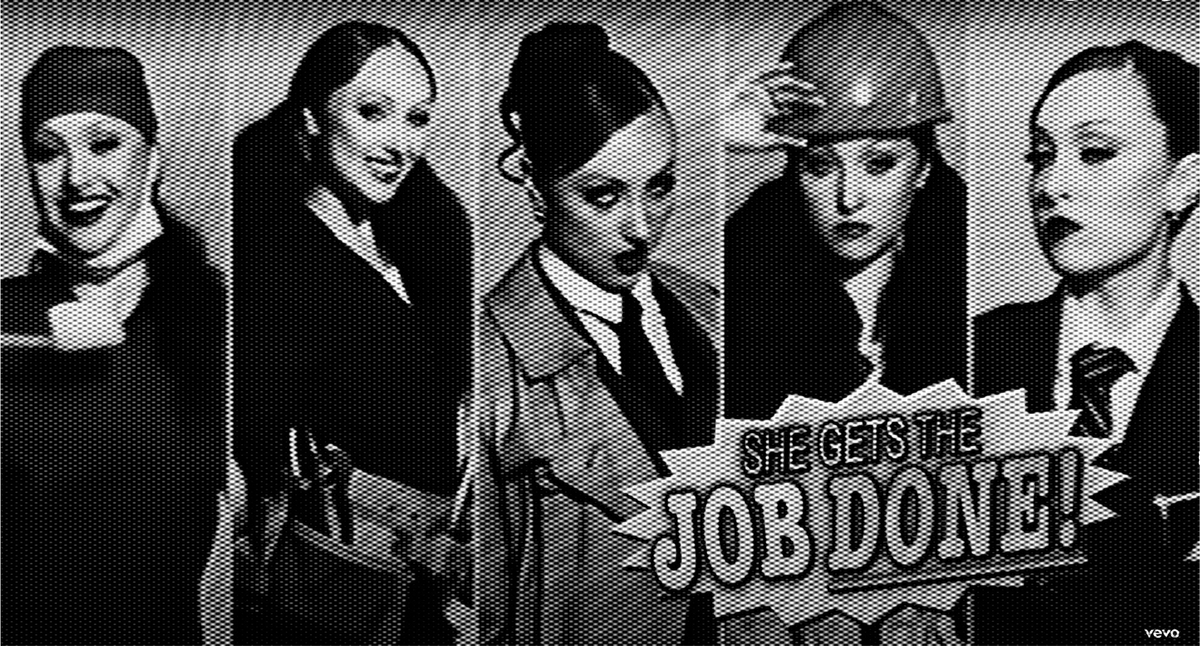
Queers are doing what we've always done: we get the job done.

Comments ()